How Can Real Estate Photography in Carpinteria Showcase a Property's Indoor and Outdoor Lifestyle?
A compelling property listing should help buyers imagine more than rooms and square footage. It should reveal how the home feels, functions, and connects with its surroundings. For agents marketing lifestyle-oriented properties, real estate photography in Carpinteria can create that connection through carefully composed interiors, inviting outdoor spaces, balanced lighting, and imagery that gives the property a sense of place. When each photograph contributes to the same visual story, buyers can better understand the relationship between architecture, natural light, landscaping, and everyday living.
Start Outside to Establish the Setting
Real estate photography in Carpinteria can showcase indoor and outdoor lifestyle by creating a visual sequence that moves naturally from the property's exterior into its living spaces and back toward the surrounding setting. Exterior photography establishes curb appeal, landscaping, architecture, and perspective, while aerial imagery can add valuable context about the lot, neighborhood, nearby amenities, and the property's relationship to its surroundings. The goal is not simply to collect attractive images, but to help viewers understand how the property could be experienced.
For coastal or setting-driven properties, an aerial photograph can provide information that a ground-level image cannot. It can show the property's position within the landscape, the scale of the lot, outdoor areas, and relevant surroundings. This broader perspective can be especially useful when location and setting are important parts of the property's appeal.
Move Through the Home With Purpose
Once the exterior establishes context, the photography should guide viewers through the home. Entryways, living rooms, kitchens, bedrooms, and other significant spaces can be photographed in a sequence that communicates spatial relationships rather than treating every room as an isolated subject.
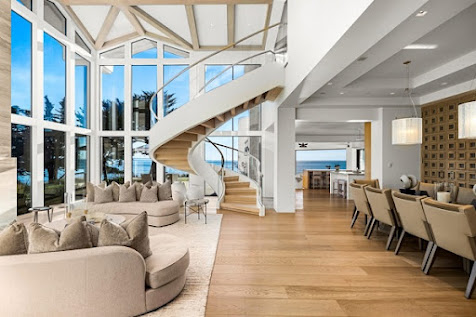
Window placement and natural light can help reveal how a room connects to its surroundings. Architectural lines, furniture placement, and perspective can further communicate depth without making the space appear artificially enlarged. A professional flash-and-ambient blend technique can help balance available light with controlled illumination, preserving interior details while maintaining the character of the space.
Connect Interior Spaces With Outdoor Living
A strong lifestyle listing does not stop at the back door. Patios, balconies, gardens, outdoor entertaining areas, pools, landscaping, or other relevant exterior features can become part of the home's broader story.
Photography can show how a living room opens toward a patio, how windows frame a view, or how landscaping extends the visual experience beyond the walls. This approach gives buyers a clearer understanding of how the property may function for morning routines, entertaining, relaxing outdoors, or spending time with family.
The strongest image selection therefore considers flow, perspective, and spatial relationships rather than simply prioritizing the largest rooms.
Use Consistent Editing to Strengthen the Story
Consistency matters when several photographs appear together in an MLS listing or marketing campaign. Professional images should feel like parts of one property presentation rather than unrelated photographs taken at different times.
An in-house editing process can help maintain consistency in exposure, color and overall presentation. High-resolution images can then be prepared in MLS-ready formats, while faster delivery helps agents move from photography to listing publication without unnecessary delays.
For example, Virtour Media combines professional still photography with aerial imagery and other property-marketing services, allowing agents to build a more cohesive visual presentation rather than coordinating every media component separately.
Frequently Asked Questions
Should a property near the coast have aerial photos?
Aerial photography can be particularly useful when the property's lot, landscape, neighborhood position, outdoor features, or surrounding setting contribute meaningfully to its appeal. It provides geographic and visual context that ground-level photography cannot.
What rooms should be photographed first?
The most important spaces should generally receive priority, including key living areas, kitchens, primary bedrooms, distinctive architectural spaces, and meaningful outdoor areas. The final sequence should support a logical walkthrough rather than follow a rigid room-by-room formula.
Can photography communicate a home's lifestyle?
Yes. Photography can communicate lifestyle by showing how rooms connect, where natural light enters, how indoor and outdoor areas relate, and how architectural and landscape features contribute to everyday use. The images should help buyers visualize experiences, not merely inventory rooms.
Conclusion
Effective real estate photography in Carpinteria can turn a collection of property images into a coherent lifestyle narrative. By starting with the setting, moving through important interior spaces, connecting indoor and outdoor areas, and using consistent professional editing, listing media can communicate architecture, atmosphere and usability more effectively. When still photography is complemented by aerial context, agents can present not only what a property contains, but also how it fits into the surrounding environment—giving prospective buyers a more complete reason to imagine themselves there.


Comments
Post a Comment